no title
Community,Education,Uncategorized
Durham Schools Use FAFSA Incentives to Motivate Students to Apply to College
College is a promising pathway for individuals to further their education, invest in their careers, discover their passions and explore how they can make an impact on the community around them. But for many students, college feels like a far-off dream, with cost serving as a major barrier to pursuing higher education.
College is a promising pathway for individuals to further their education, invest in their careers, discover their passions and explore how they can make an impact on the community around them. But for many students, college feels like a far-off dream, with cost serving as a major barrier to pursuing higher education.
Counselors at Durham Public Schools are trying to bring these dreams a little closer to reality by encouraging students to complete the Free Application for Federal Student Aid, commonly known as FAFSA.
The FAFSA determines students’ eligibility for federal student aid and helps individual colleges and universities determine eligibility for need-based scholarships.
In 2023, Durham Public Schools received a $50,000 grant from the Belk Foundation to encourage students to complete the online FAFSA application. With the money from the grant, counselors are able to incentivize students to complete FAFSA and understand the financial resources available to them. Completing the form then, reduces the possibility of high school students ruling out higher education altogether because of cost.
Filling out FAFSA does not guarantee college attendance or completion. But for lower-income students weighing whether to enter the workforce or pursue higher education, the results can alter the course of their future. For students from families with limited income and assets, FAFSA can unlock several forms of financial aid, including Pell Grants, subsidized loans, work-study programs and state or institutional aid.
Cherice Artis, coordinator of K-12 school counselors for Durham Public Schools, said increasing students’ awareness of available resources should start at a young age and conversations about paying for college should be a natural part of the college-going process. Starting in elementary and middle school, teachers regularly discuss college to cast vision for young students.
Artis partners with high school counselors to help students and families understand the FAFSA process, complete the application and connect with available resources afterward. They work together to create ideas and coordinate outreach events to entice students and families to complete FAFSA.
Artis said when she applied for the Belk Foundation grant, her vision went beyond increasing FAFSA completion rates. It also was about “expanding what our students believe is possible and making sure that finances do not become a barrier before they even have the opportunity to pursue their dreams.”
In North Carolina specifically, the money is available for students to pursue, but many do not know how to access it.
The National College Attainment Network estimated that the high school class of 2023 left more than $4 billion in Pell Grant funding unclaimed because students did not complete FAFSA.
William Evans, school counselor and magnet coordinator at Durham Early College of Health Sciences, coordinated more than 10 outreach and informational events to encourage students to complete the application. He also held individual conferences with every senior at the school.
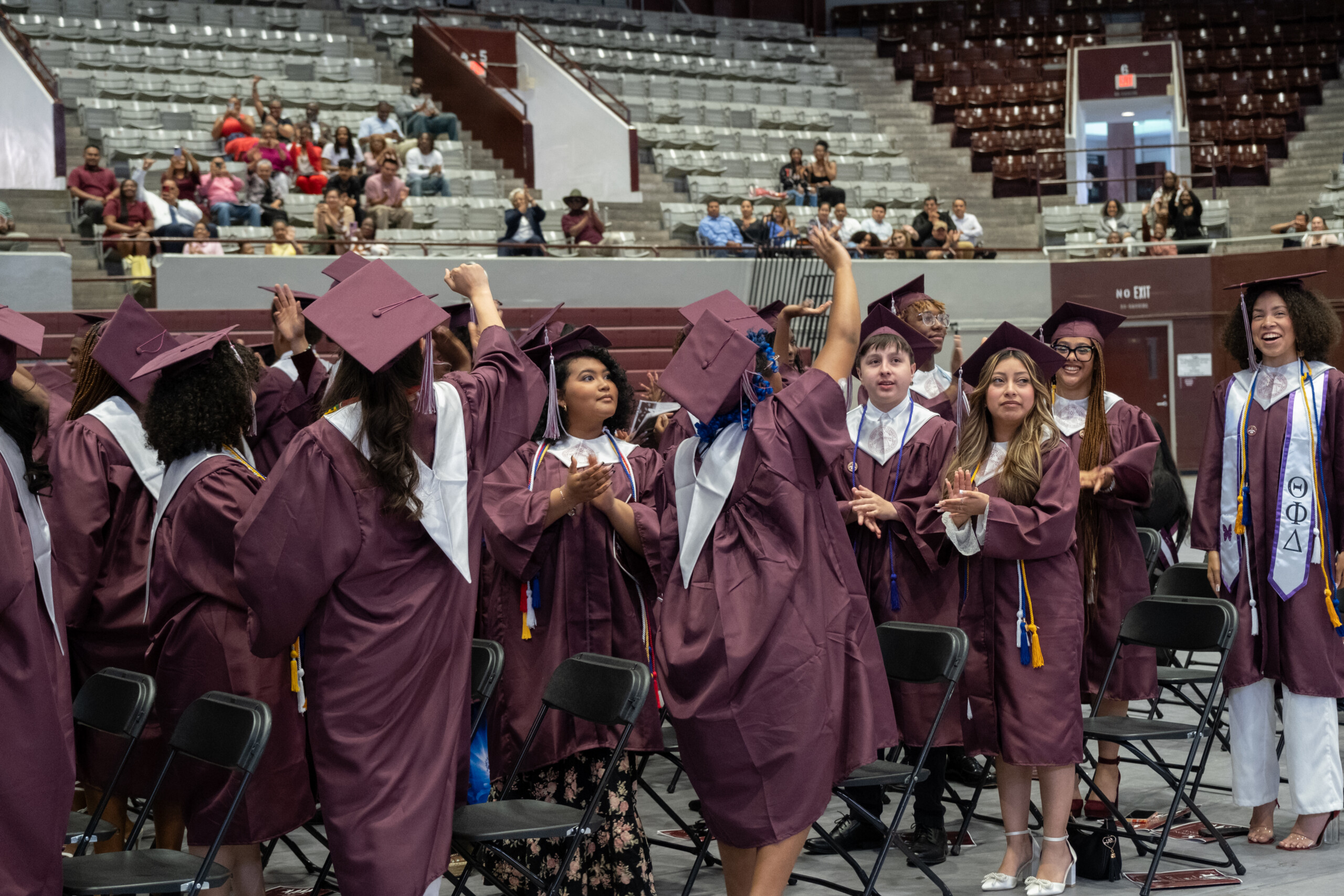
On Feb. 20, 2026, Evans coordinated FAFSA-tine’s Day, a celebration for students who had completed FAFSA by Feb. 15. Grant money paid for Chick-fil-A, cupcakes and candy grams. Board games, cards and cornhole stations gave students an opportunity to spend time together and celebrate completing one step in their post-graduation journey.
Grant money also funded student-requested door prizes, including iPads, televisions and gift cards.
Completing FAFSA is not something students can always do alone. The process often requires collaboration with parents and guardians who help provide identification, demographic, tax and asset information drawn from Internal Revenue Service records.
For some students in Durham County, pursuing higher education can mean navigating much of the application process independently. FAFSA, however, is a step that is uniquely collaborative and requires cooperation from multiple people in a household. Recognizing this, Evans works closely with parents and guardians to help students access financial aid.
The grant supports more than student rewards and events. It also gives parents an opportunity to participate. In May 2026, one incentive Evans coordinated was a $200 Visa gift card raffle for parents of students who had completed the FAFSA.
Evans said schools do not receive attention, recognition, or bonuses for increasing FAFSA completion rates.
“It’s all about what benefits the students, and I want them to have all the information available so that they can get the funds that they need,” Evans said.
Durham Public Schools has seen an increase in FAFSA completion rates alongside an increase in Pell Grant funding awarded to students. From 2022, the year before the district received the Belk Foundation grant, to 2023, the first year it received additional funding for student incentives, FAFSA completion rates increased by 6% across the district. Students across the 14 high schools received more than $3 million in Pell Grants.
At Durham Early College of Health Sciences, Evans reported a 13.5% increase in FAFSA completion rates in 2026 compared with 2025. Students also saw a 22% increase in scholarship funds awarded during the 2026 school year.
Lakisha Bostik, a professional school counselor at J.D. Clement Early College, said part of her journey into counseling stemmed from not receiving the information and resources she needed to pursue higher education. She said she had to figure out the process on her own.
“Everybody doesn’t want to go to college and that’s fine. But I want to help them have some type of guidance and help coming up with a plan,” she said.
At J.D. Clement Early College, Bostik said, every student knows who she is — and she believes that is how it should be.
This is where the gap is closing at Durham Public Schools: between students who must navigate the path to higher education on their own and those who have someone to guide them along the way. Through counselors like Bostik and Evans, students are gaining access to the information, resources and encouragement they need to see college and other post-graduation opportunities as attainable options.
The grant gave counselors the financial means to incentivize students to complete the FAFSA. More importantly, it provided an opportunity to start conversations at home about life after high school and to help families explore their students’ options together.
“I like to make sure that every single senior that leaves my school walks away with an E in their pocket — either employment, enlistment or enrollment,” Evans said.
Through the initiative, Durham Public Schools is not only seeing an increase in completed FAFSA forms but also fostering an environment where students feel comfortable approaching school counselors for help. Through community nights and districtwide events, the district is making support more visible to students at every stage, starting conversations about higher education in elementary school and continuing until graduation.
“You should know who your counselor is, and they should be supporting you every step of the way,” Bostik said.
While increases in FAFSA completion rates and scholarship dollars reflect the tangible impact of the grant, counselors say the greater success lies in helping students recognize the opportunities available to them. By making financial aid more accessible and the application process less intimidating, Durham Public Schools counselors are helping students approach life after high school with a clearer understanding of what is possible.
Ultimately, this grant was about more than increasing FAFSA completion,” Artis said. “It was about expanding what our students believe is possible and making sure that finances do not become a barrier before they even have the opportunity to pursue their dreams.”
Share this article

Follow us

This puppy is preparing an AI Chatbot for you!